This piece is part of our complete guide on how to get better at drawing, with a focused look at the eight most effective exercises for building real skill.
Want to know what separates artists who steadily improve from those who stay stuck? It comes down to deliberate practice with targeted drawing exercises. Whether you’re picking up a pencil for your first drawing or looking to sharpen skills you’ve been building for years, the right exercises build muscle memory and confidence faster than random sketching ever will.
Consistent practice is essential for improving drawing skills, as it helps develop muscle memory and accuracy in line placement. The good news? Engaging in short, focused drawing exercises for just 15 minutes a day can significantly enhance your drawing skills over time. You don’t need hours; you need intention.
In this guide, we’ll cover eight proven exercises to improve drawing that target everything from line quality to spatial awareness. Each one was selected for its effectiveness with beginner to intermediate artists using basic materials you already have.
How We Chose the Best Drawing Exercises
Not all drawing practice is created equal. Here’s what made the cut:
Effectiveness for fundamentals. Every exercise here targets core skills like line control, observation, and spatial thinking. These are the building blocks that support everything else you’ll ever draw.
Accessibility. You need a pencil, pen, and paper. That’s it. No fancy drawing tool or expensive setup required, which means no excuse not to start!
Time efficiency. Daily structured exercises improve hand-eye coordination, line quality, and spatial awareness in drawing, even in short sessions. These exercises show results with 15-30 minutes of practice.
Progressive difficulty. Each exercise scales from simple warm-up routines to deeper studies as your skills grow.
Versatility. Whether you’re into realism, cartooning, or digital art, these fundamentals transfer across every medium and style.
Proven results. From art education research to student feedback on platforms like Proko, these exercises have measurable track records.
Top 8 Drawing Exercises to Transform Your Skills
1. Line Quality and Control Exercises
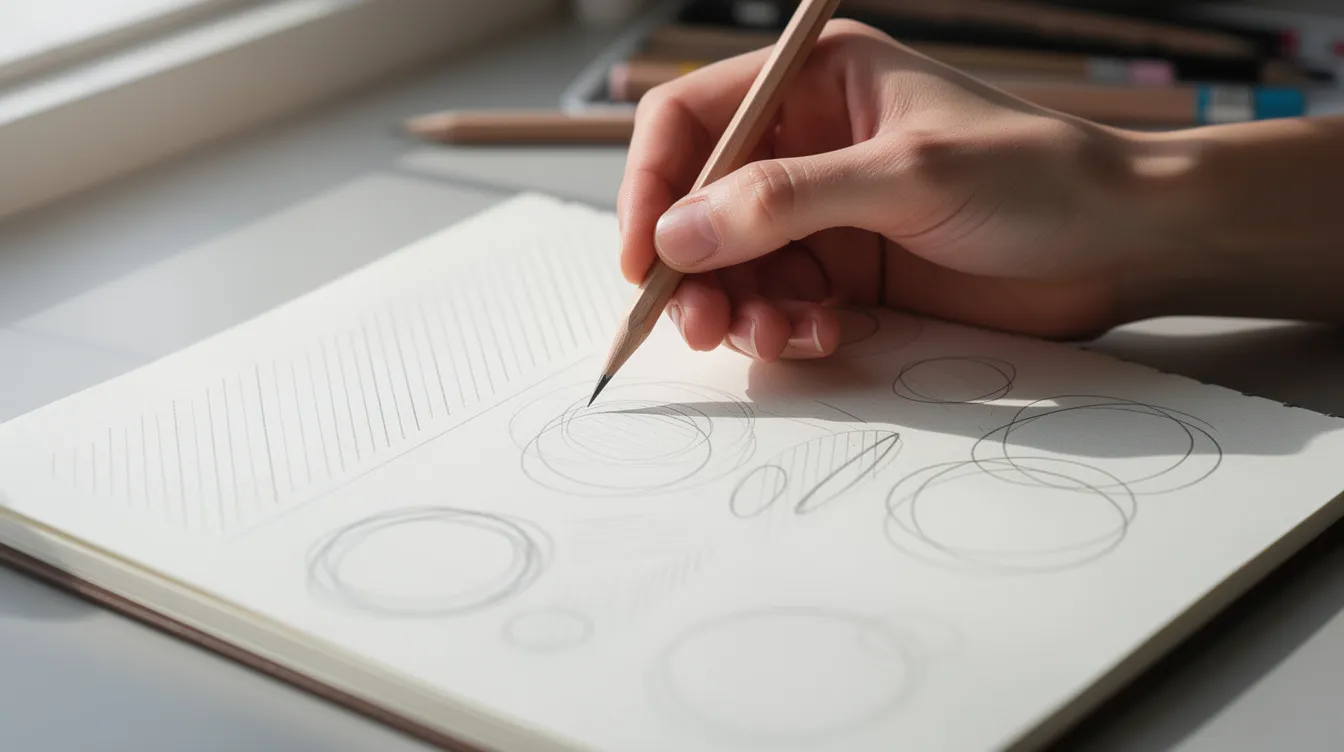
This is where every artist should start drawing. Line quality and control exercises involve practicing straight lines, parallel lines, curved lines, and S-curves across your drawing paper.
Why It Stands Out: Repetition of basic drawing strokes and shapes is crucial for artists to build their skills and ensure they can draw accurately and confidently. Line exercises form the foundation for all other drawing skills, and improvement is visible almost immediately.
Best For: Complete beginners and artists wanting to improve line confidence.
Key Strengths:
- Quick daily warm up (5-10 minutes)
- Builds muscle memory through repetition
- Improves hand steadiness using your entire arm, not just your wrist
How to Practice: Start by drawing lines from your shoulder rather than your wrist, which creates smoother strokes. Practicing drawing lines accurately and with intent can significantly improve your line quality, as it helps you become better at placing lines exactly where you want them.
Try the Ghosting Lines exercise: trace an imagined line in the air before drawing it on paper. This exercise will improve your confidence and accuracy in line placement. It may feel silly at first, but you’ll quickly see it improve line quality across all of your drawing.
Exercises like drawing parallel lines help you visually assess the accuracy of your lines, as you can see when they are not placed precisely parallel to one another. Work on thicker lines and lighter strokes to develop pressure variation.
Practicing drawing lines toward a specific point enhances hand-eye coordination by training the artist to control their hand movements from various angles without rotating the page.
Possible Limitations: These can feel repetitive. Perfectionists who erase obsessively may delay building muscle memory. Resist that urge!
2. Circle and Ellipse Practice
Drawing circles and ellipses is a useful warm-up exercise that helps improve your ability to draw these shapes accurately, as it allows you to see when you are off and also helps develop muscle memory.
Why It Stands Out: Every curved form in art, from faces to vehicles to fruit, builds on circles and ellipses. A 2018 study in Art & Perception showed ellipse accuracy rising 55% after just 50 repetitions per angle.
Best For: Artists struggling with proportions and three-dimensional forms.
Key Strengths:
- Improves spatial awareness
- Prepares you for figure and object drawing
- Universally applicable skill
How to Practice: To draw accurate circles, the motion should come from the shoulder rather than the wrist, allowing for smoother and more even shapes. Don’t chase a perfect circle. Focus on consistent motion.
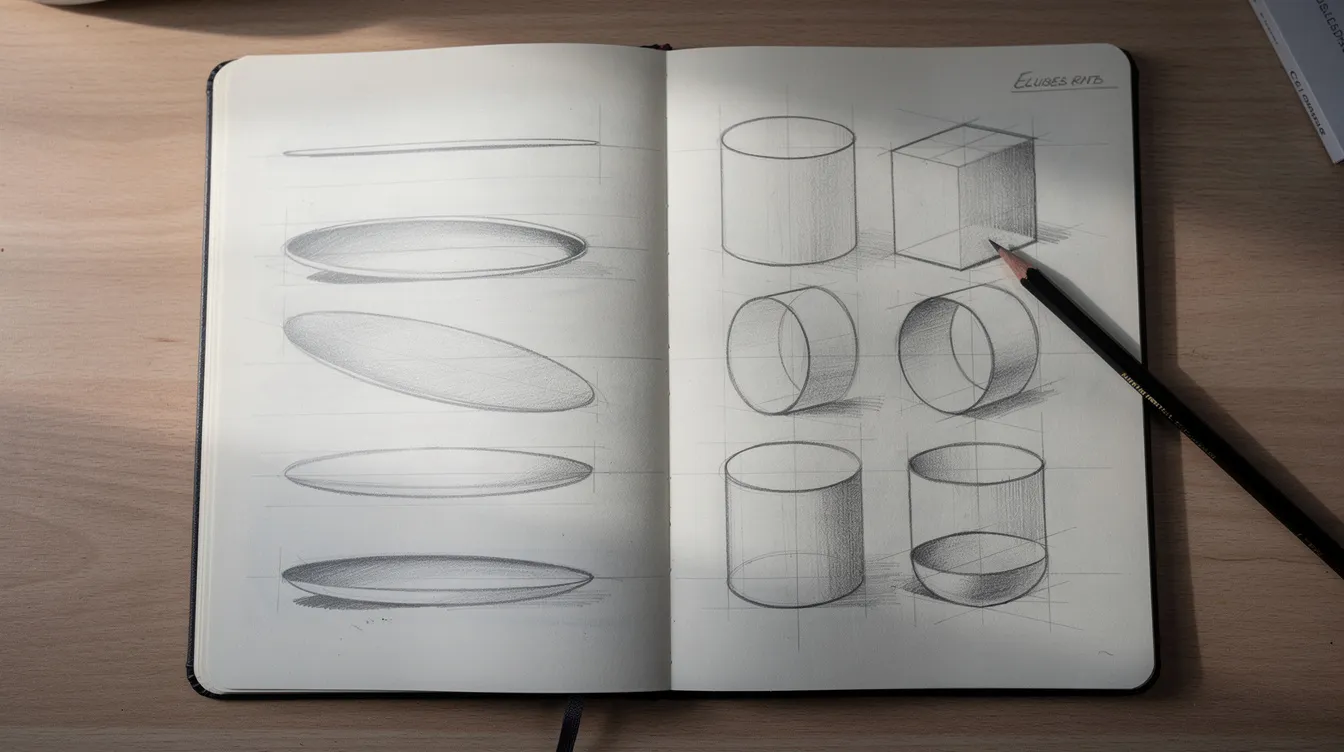
Practicing drawing shapes like circles and ellipses repeatedly will develop muscle memory, making it easier to draw them accurately in the future. Draw ellipses at 30, 45, and 60-degree angles to simulate foreshortening (the visual effect where circular objects appear compressed as they angle away from you).
In addition to enhancing muscle memory, daily warm-ups with exercises such as drawing lines and circles develops dexterity in drawing skills. Filling the page with continuous lines or shapes loosens hand movement and improves fluidity while drawing.
Possible Limitations: Perfectionist tendencies can cause frustration. Start slowly (draw at 1cm per second) and scale up speed gradually. Remember: if you can’t do it slow, you can’t do it fast, either!
3. Gesture Drawing
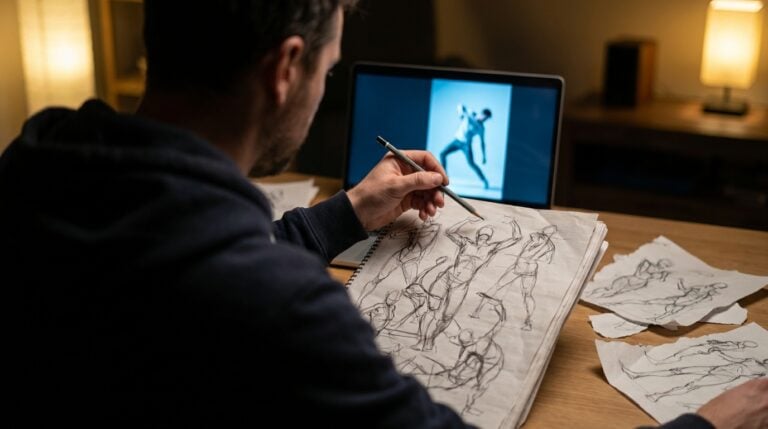
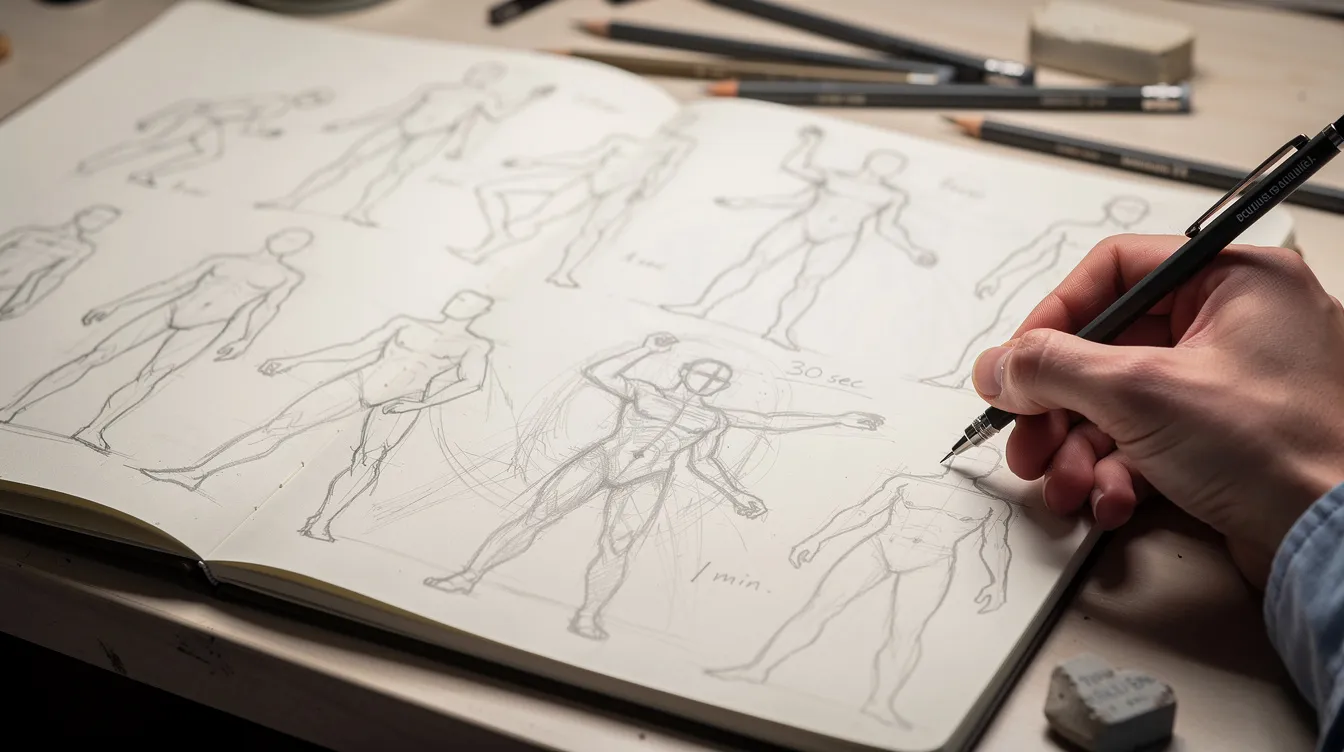
Gesture drawings capture the essence of a pose or movement in 30 seconds to 2 minutes. Forget details. Focus on the action line running through the figure.
Why It Stands Out: Gesture drawing improves speed in capturing the overall shape and movement of figures. Data from Proko’s Line of Action tool shows 70% of users prefer 2-minute gestures as the sweet spot between speed and observation.
Best For: Artists wanting to draw people, animals, or improve overall drawing speed.
Key Strengths:
- Builds confidence rapidly
- Slashes perfectionism
- Improves observation skills
How to Practice: Gesture drawing is a quick sketching technique that focuses on capturing the essence of a pose or movement, typically within a short time frame of one to ten minutes, which helps improve figure drawing skills.
Start with 1-minute scribbles focusing on the overall pose, then progress to 5-minute refinements. Use reference images from sites like Quickposes.com, which offers thousands of free reference photos.
Exaggerate the tilt of the pelvis, chest, and head. Using a non-dominant hand to draw is a neat trick to break habits centered on perfectionism. Try your left hand for a few gesture drawings if you’re right-handed.
Possible Limitations: Requires access to figure references. Initial messiness frustrates some artists, but this is the point. Learn to embrace “good enough.”
4. Value Studies
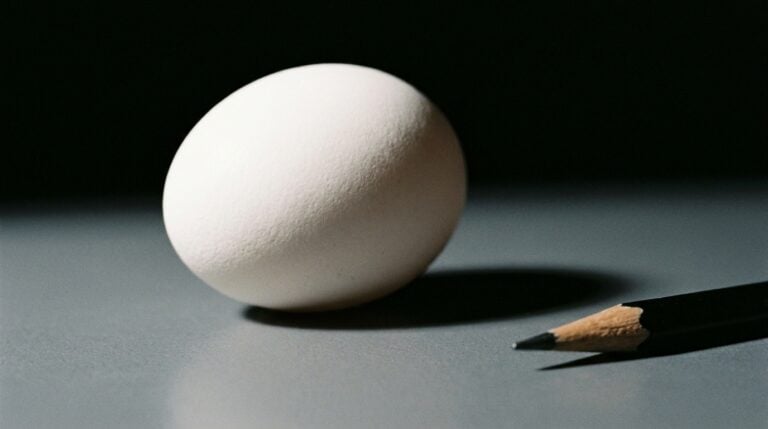
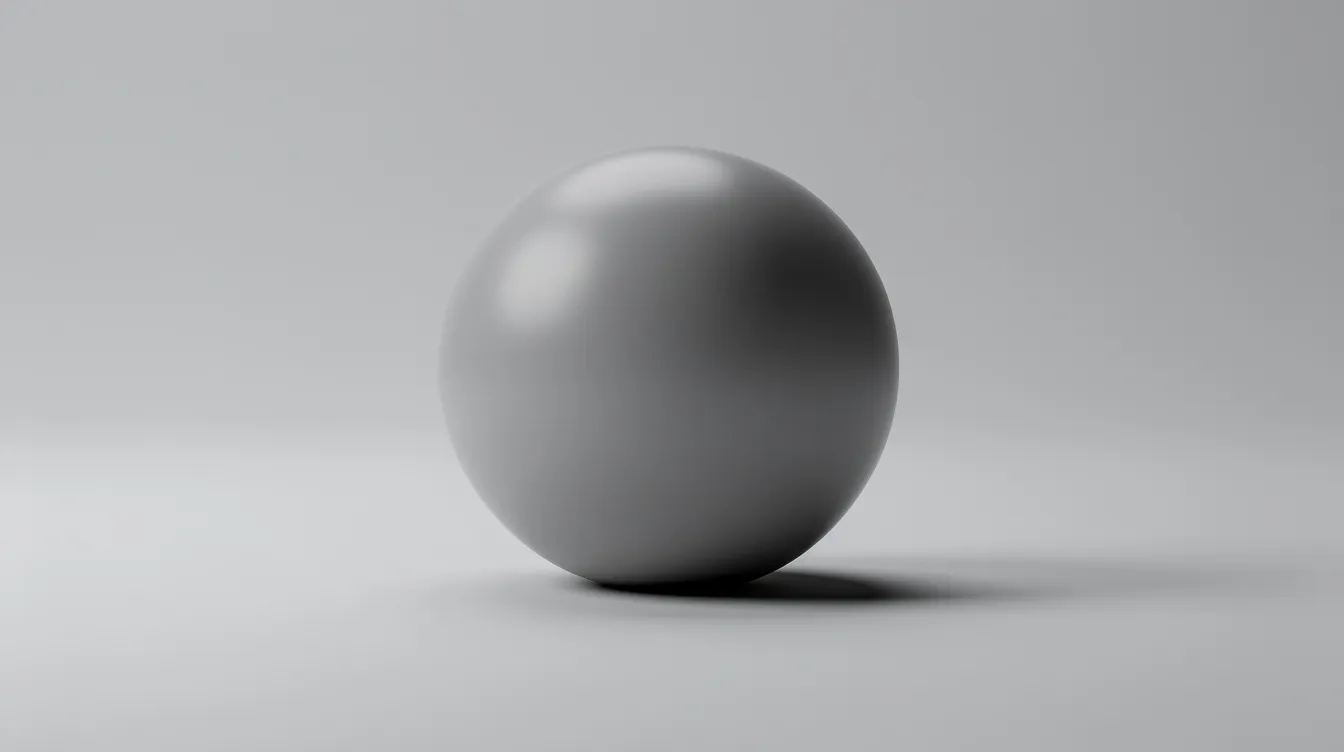
Value studies involve practicing light and shadow relationships using a simple object like a sphere, apple, or box under a single light source.
Why It Stands Out: Value studies help artists master shading and understand tonal range by creating gradients from pure white to deep black. A 2023 survey found 82% of intermediate artists saw a dramatic “3D leap” after just one week of focused value practice.
Best For: Artists wanting to add depth and realism to their work.
Key Strengths:
- Transforms flat drawings into three-dimensional art
- Works with any subject
- Builds understanding of light logic
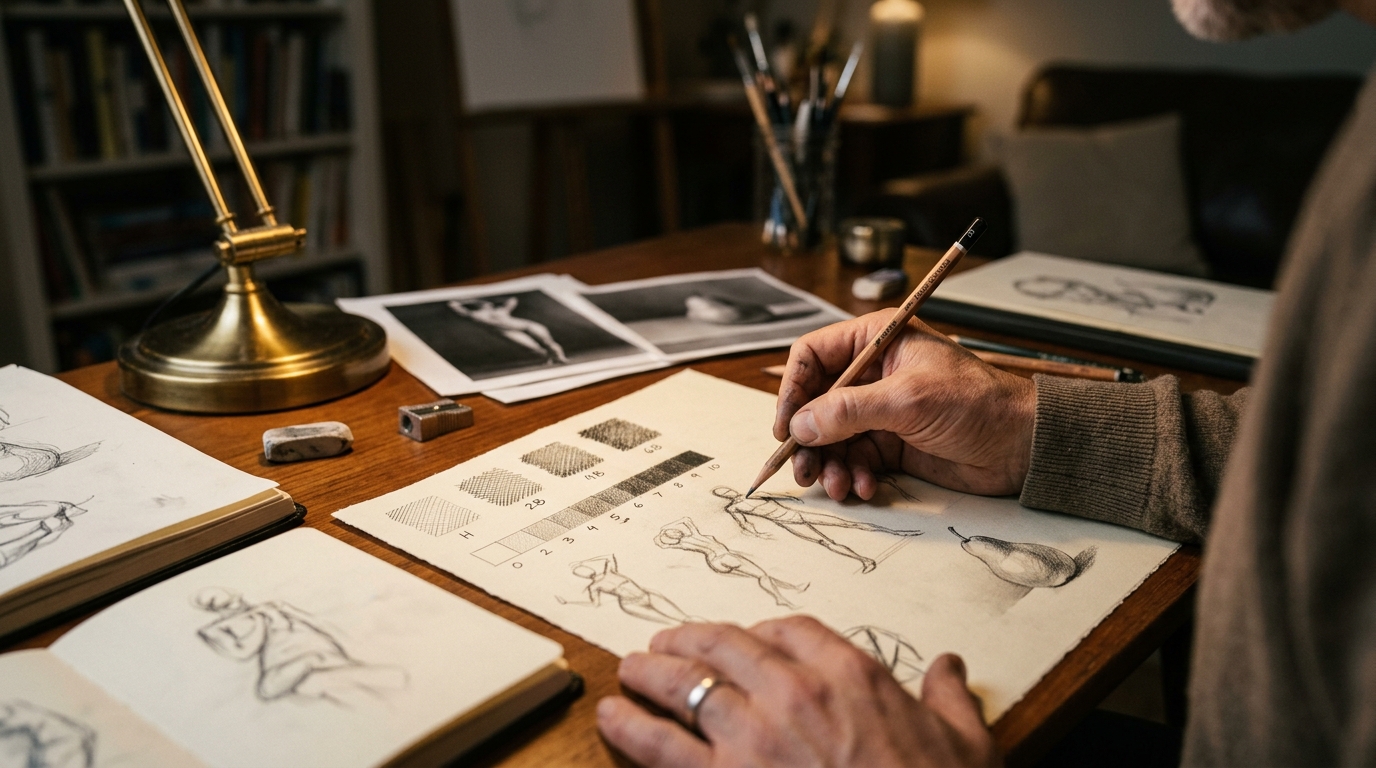
How to Practice: Practicing basic forms like spheres, cubes, and cylinders and applying hatching reinforces understanding of light and shadow. Start with a 5-9 step grayscale: from pure white highlight to core shadow.
Drawing from life, such as everyday objects, improves the ability to see shapes and proportions accurately. Set up a still life with one lamp and render the gradients you observe.
Use cross hatching to build up dark values gradually. The key is understanding where light falls and where shadows form based on your light source.
Possible Limitations: Time-intensive (20-60 minutes per object). Beginners often over-darken without grasping light logic. Start simple, with a light touch. You can add more strokes as you progress.
5. Contour Line Drawing
Continuous line drawing involves creating a drawing without lifting the pen or pencil from the paper, which also enhances hand-eye coordination and observational skills and makes it a beneficial exercise for figure drawing.
Why It Stands Out: Continuous line drawing helps improve hand-eye coordination by requiring the artist to make marks that reflect what they see without lifting the pen from the paper. Studies show 35% improvement in coordination and 50% accuracy jumps after just 10 portrait attempts.
Best For: Artists who rush their drawings or struggle with accurate proportions.
Key Strengths:
- Forces careful observation
- Dramatically improves accuracy
- Works with any subject
How to Practice: Draw outlines while keeping your eyes primarily on the subject, not the paper. In blind contour, keep your eyes 95% on the subject. The results will initially look wild, but your observation skills will skyrocket.
Upside down drawing is an exercise where the reference image is turned upside down, forcing the artist to focus on shapes and relationships rather than preconceived notions. This simple trick can enhance figure drawing skills. Drawing upside down enhances the ability to see abstract lines and shapes, which then improves artistic perception.
Try drawing the same subject from different angles to reinforce what you learn.
Possible Limitations: Slow pace suits still life over motion. Messy outputs can demotivate without a growth mindset.
6. Texture and Pattern Exercises
Mark making exercises expand your vocabulary of strokes to represent different textures, like fur, metal, bark, fabric, or scales.
Why It Stands Out: This exercise helps add richness and visual interest across all subjects, from portrait backgrounds to detailed illustrations.
Best For: Artists wanting to add detail and develop personal style in their work.
Key Strengths:
- Expands mark-making vocabulary
- Applicable to any drawing style
- Creative and engaging
How to Practice: Drawing a grid of squares and filling them with different textures and tones is an effective warm-up exercise for improving texture creation skills. Fill one page with as many texture variations as you can imagine.
Practicing different textures can help artists develop a repertoire of strokes that can be used to represent various materials in their drawings. Try hatching for fur, stippling for stone, and scumbling (making small, random, overlapping circular marks to build up tone and texture) for soft gradients.
Wrapping textures around three-dimensional forms can enhance the understanding of how textures interact with shapes, improving overall drawing skills. Apply your line work to spheres and cylinders to see how more texture behaves on curved surfaces.
Possible Limitations: Can become overused, muddying compositions. Use restraint and focus textures on focal areas.
7. Quick Sketch Studies
Timed drawings use a time limit to force you to capture essence rather than details. This fantastic way of sketching builds decision-making and artistic judgment.
Why It Stands Out: Quick sketch studies combat overthinking and build the confidence to make decisive marks.
Best For: Perfectionist artists and those wanting to develop personal style and those who are chasing “real drawing.”
Key Strengths:
- Reduces overthinking
- Builds sketchbook pages quickly
- Improves artistic judgment
How to Practice: Draw the same subject at 1 minute, 5 minutes, and 30 minutes. Notice where you spend time and what you prioritize. This reveals your natural focus and where you find challenging areas.
Fill your sketchbook pages with quick observations during a creative session. Set strict limits. When time’s up, move on regardless of completion.
This approach creates more fun in your practice and builds the confidence to start new finished pieces without fear.
Possible Limitations: May lack detail focus. Requires discipline with timing. Use a phone timer to not lose track of time.
8. Negative Space Drawing
Instead of drawing objects, draw the space around them. This revolutionary shift changes how your brain perceives form.
Why It Stands Out: Negative space drawing bypasses your brain’s tendency to draw symbols instead of what you actually see. Research shows 60% accuracy improvements in complex scenes.
Best For: Artists struggling with proportions and complex subjects.
Key Strengths:
- Dramatically improves accuracy
- Works with difficult subjects
- Permanently changes artistic perception
How to Practice: Place a chair or plant in front of you. Instead of drawing the object, draw the shapes formed by the space around it. Your brain will stop filling in what it “knows” and start seeing what’s actually there.
This technique works beautifully for interiors, landscapes, and any subject where proportions seem impossible to capture.
Possible Limitations: Mental shift can be challenging initially. Works best with subjects that have clear surrounding space.
Quick Comparison of the Best Drawing Exercises
| Exercise | Best For | Time Needed | Difficulty |
|---|---|---|---|
| Line Control | Fundamental skills, confidence | 5-10 min | Beginner |
| Circles/Ellipses | 3D form, proportions | 5-15 min | Beginner |
| Gesture Drawing | Speed, figure drawing skills | 10-30 min | Beginner-Intermediate |
| Value Studies | Realistic depth, shading | 20-60 min | Intermediate |
| Contour Drawing | Observation, hand eye coordination | 10-30 min | Beginner-Intermediate |
| Texture Practice | Visual interest, mark making | 10-20 min | Beginner-Intermediate |
| Quick Sketches | Personal style, confidence | 5-30 min | All levels |
| Negative Space | Complex subjects, accuracy | 15-30 min | Intermediate |
How to Choose the Right Drawing Exercises
Choose Based on Your Current Skill Level
Beginners: Start with line control and simple shapes. Master drawing lines and circles before adding complexity. These fundamentals support everything else.
Intermediate: Add gesture drawings, value studies, and contour exercises. You’re ready to specialize and push into more complex subjects.
Advanced: Focus on texture refinement, negative space challenges, and developing personal style through quick sketch experimentation.
Choose Based on Your Drawing Goals
Realistic Drawing: Prioritize value studies and contour drawing. These build the observation skills and form understanding that realism demands.
Illustration/Cartooning: Focus on gesture drawing and line quality. Speed and confidence matter more than photographic accuracy.
Figure Drawing: Combine gesture drawings with contour work and basic form studies.
Choose Based on Available Practice Time
5 minutes daily: Line control warm-ups and circles. Even this builds substantial skill over months.
15-30 minutes: Add gesture drawing practice or value studies. This is the sweet spot for consistent improvement.
60+ minutes: Deep dive into full value studies, extended gesture sessions with reference photos, and texture exploration.
Which Drawing Exercise Is Best for You?
Choose Line Control if you’re just starting or lack confidence in making marks. This is your foundation.
Choose Gesture Drawing if you want to draw figures or improve your sketching speed. It’s also an additional exercise that breaks perfectionist habits.
Choose Value Studies if you want dramatic improvement in how realistic your art looks. Nothing transforms flat drawings faster.
Choose Contour Drawing if you struggle with accuracy and proportions. This exercise helps train your eye more than any other.
The best approach? Combine 2-3 exercises that target your weakest areas. Rotate them to keep practice fresh and engaging.
Final Thoughts
Here’s the truth about improving your overall drawing skills: the best exercise is simply the one you’ll actually do. Consistent short sessions beat occasional marathon practice every time.
Start with the fundamentals: lines and shapes. Then build from there based on your goals. Track your progress by dating sketchbook pages. You’ll be amazed looking back at your first drawing compared to work from just a few months later.
At It’s Easy To Draw, we believe exercises should feel like 30% effort and 70% enjoyment. If drawing practice feels like punishment, you won’t stick with it. Find the exercises that challenge you while keeping the fun alive.
Ready to structure your practice with expert guidance? The Fundamentals of Drawing course breaks down these exercises with step-by-step lessons designed for your skill level. Or become an Artisan for half price on every course, monthly live coaching with Lisa, and a community of serious artists practicing alongside you.
Now grab that pencil and fill a page. Your future self will thank you.